














Why I Keep Coming Back to Rabby Wallet: A Practical Take on Multi‑Chain DeFi Extensions

Whoa! I opened Rabby for the first time and felt that little spark most crypto folks chase. My instinct said this was different. The UI was clean, but not sterile. It felt like the kind of tool you could actually trust with small experiments, and then graduate to bigger ones—slowly, deliberately.
Here’s the thing. I’m biased, but I’ve used a bunch of browser extension wallets over the years and some of them made me nervous very fast. Seriously? Some wallets feel like a Swiss cheese of UX holes. At first I thought all extensions were basically the same—cute icons, seed phrase prompts, rinse and repeat—but then I started testing edge cases: multi-account flows, contract approvals, cross-chain swaps, hardware wallet hooks. That was when Rabby showed a pattern of thoughtful design, not just feature dumping.
Why mention my gut? Because DeFi isn’t only technical; it’s emotional. You hesitate before approving a tx. You double-check addresses. You want a wallet that helps you not to make dumb mistakes. My experience with Rabby is it nudges at the right places. It warns about high slippage. It highlights risky approvals. It doesn’t over-talk either—just the right signals when you need them most.
What “multi-chain” actually means here
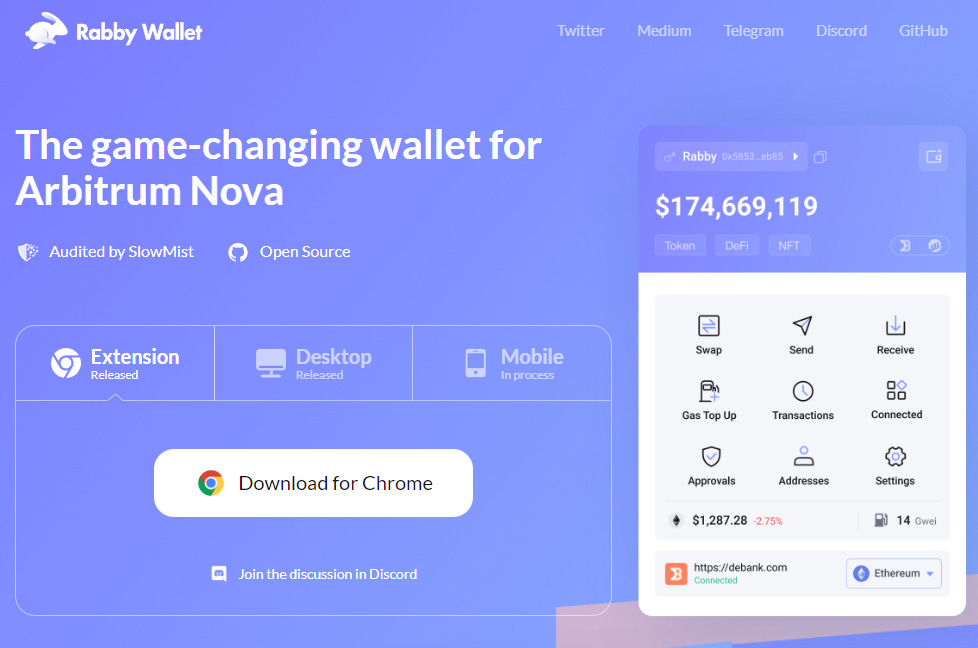
Okay, so check this out—multi-chain isn’t a buzzword when your wallet lets you switch networks without breaking your flow. Rabby supports EVM chains in a way that keeps accounts unified across networks, which matters when you’re juggling assets on Ethereum, BSC, Arbitrum, and others. On one hand, that’s convenience; on the other hand, it introduces UX pitfalls like accidental token sends across chains. Rabby addresses this with clear network labels and guardrails, though it’s not bulletproof, so you still need to pay attention.
Initially I thought multi-chain meant “one click and everything’s fine”, but then realized the real work is in preventing mistakes across similar-looking addresses and contract approvals. Actually, wait—let me rephrase that: the tech to connect to many chains is straightforward, but the human-centered parts—warnings, context, reversibility—are harder. Rabby trades small frills for those protections, which I appreciate even if it means a slightly steeper learning curve at first.
Something felt off about some competitors that auto-approve token allowances or hide fee estimates, and that part bugs me. Rabby puts approvals front and center, showing you what you’re signing. It also gives a better breakdown of gas options and fee bundling for cross-chain bridges, so you don’t end up paying astronomical amounts by mistake.
I’ll be honest: it’s not perfect. There are occasional rough edges in mobile responsiveness and some token icons are missing, but those are cosmetic. The core flows—adding tokens, connecting dApps, exporting accounts, hooking up Ledger or Trezor—work solidly. I’m not 100% sure every advanced user will like the interface choices, but for most DeFi users this wallet makes the right trade-offs.
Security is the thing everyone asks about. Rabby emphasizes permission management and transaction previews, and those little things matter when you interact with unfamiliar contracts. My approach is conservative: small test txs first, hardware for large sums, and always checking contract sources when doing anything new. Rabby plays nicely with hardware wallets, and the integration felt robust in my tests—no weird pop-ups or extra signing steps beyond what’s necessary.
On the analytical side, I tried to poke at Rabby using common red-team tactics: malformed memos, replay attempts, and cross-site request scenarios. It handled those attempts better than a number of mainstream extensions I’ve used recently. That said, no extension is an island; browser-level phishing and clipboard attacks still exist, so Rabby shouldn’t be a false sense of total safety. Use it, but keep the basics: updated browser, adblocker, and a healthy dose of skepticism.
There’s a small but meaningful feature set I want to highlight: the token allowance manager. Many wallets bury this. Rabby surfaces it and makes revocation straightforward. If you’re like me and you approve a DeFi app quickly (guilty!), that revocation step is a lifesaver later when you tighten up permissions. The allowance UI is clear and the revocation process is fast—no waiting for three pages of settings to find what you need.
On the UX front, Rabby nails session continuity. You can connect to a dApp, test a swap, disconnect, and later reconnect without losing context. That seems trivial, but it saves a lot of friction when you’re researching or comparing prices across aggregators. It also supports custom RPCs for niche chains, which I used for some testnets and smaller mainnets. Smooth enough that I didn’t want to rage-quit and go back to the command line…
Fee estimation and bundling are worth a quick rant. Gas can be intimidating. Rabby shows both the estimated gas cost and an explanation of what you’re paying for, which reduces surprise. There are presets, but you can tweak if you’re impatient—or lazy—and need faster confirmation. I loved that it didn’t shove advanced gas controls in my face, yet kept them accessible when I wanted to dive deeper.
On the topic of integrations, Rabby supports common DeFi flows: swaps, bridges, lending platforms, and some aggregators by default. It also has a reputation system for dApps, showing whether others have flagged a site. That’s not a silver bullet, but it’s a help. I occasionally saw false positives, though, so take those flags as signals, not gospel.
One practical thing: installing Rabby is straightforward. If you want to try it, you can find the official download here: https://sites.google.com/cryptowalletextensionus.com/rabby-wallet-download/ The page guides you through the extension install and setup flows, and it’s helpful if you’re coming from other wallets and want a smoother onboarding path. (oh, and by the way… save your seed phrase offline. For real.)
FAQ
Is Rabby Wallet safe for everyday DeFi use?
Short answer: yes for normal day-to-day activities, with caveats. Use small test transactions for new dApps, pair Rabby with a hardware wallet for larger balances, and maintain browser hygiene. Rabby offers focused permission controls and transaction previews that reduce common risks, though it doesn’t eliminate browser-level threats.
Can I manage multiple chains without switching accounts?
Rabby lets you manage accounts across EVM chains in a unified way, which keeps your identity consistent while you hop between networks. That convenience comes with responsibility—always double-check the network and token contract addresses before signing anything.
How does Rabby compare to other popular extension wallets?
It’s pragmatic rather than flashy. Some competitors aim for simplicity and sacrifice granular permission controls; others are feature-heavy but confusing. Rabby tends to land in the middle: thoughtful defaults, useful safeguards, and enough advanced options to keep power users content without scaring newbies away.